


Low Energy Despite Good Sleep? A Practical Guide
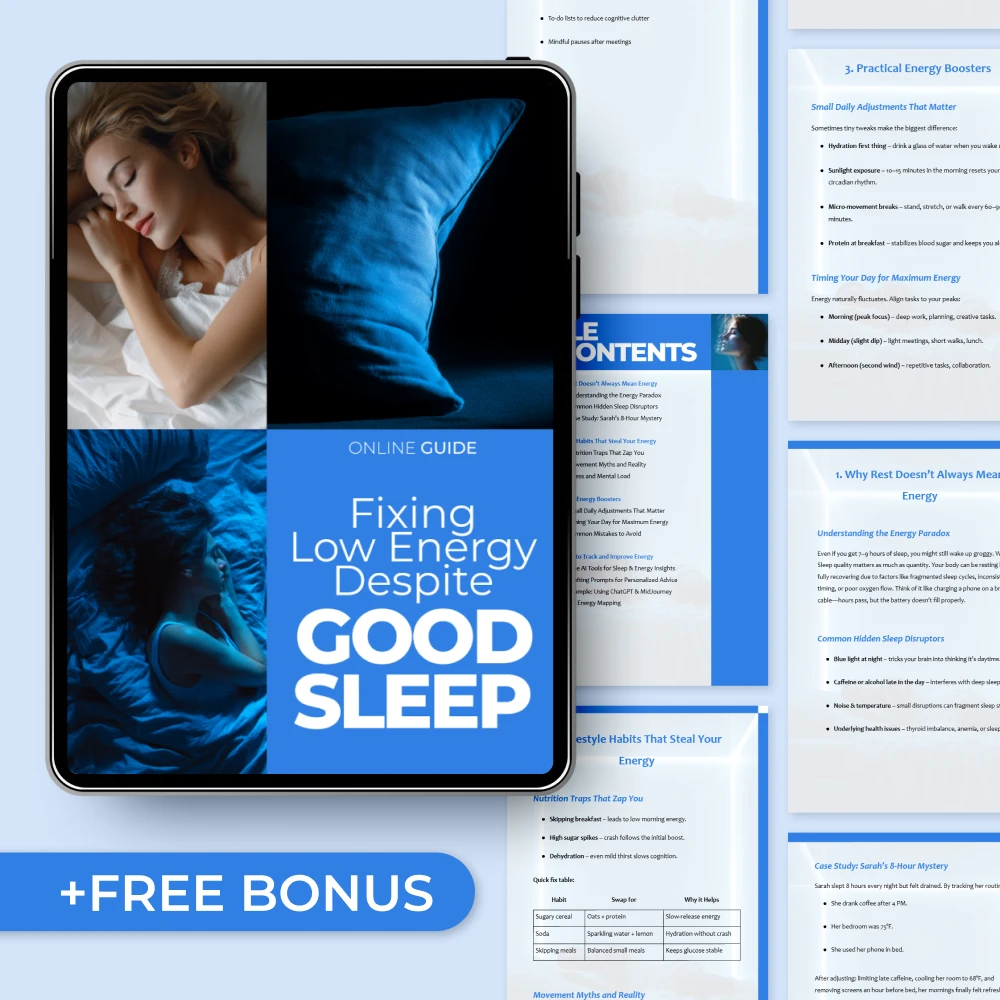
Low Energy Despite Good Sleep? A Practical Guide

Why Good Sleep May Not Be the Whole Picture
Sleep duration matters, but it’s only one part of the picture. If your sleep is frequently interrupted or you wake feeling unrefreshed, the quality of that sleep may matter too. Stress, activity levels, eating patterns, hydration, medications, and health conditions can also influence how you feel during the day.
Start by noticing the pattern rather than trying to diagnose it. Are you tired when you wake up, after lunch, or throughout the day? Is the fatigue new, or has it been around for weeks? Does it make work, driving, exercise, or household tasks harder than usual? These details can be useful if you decide to speak with a healthcare professional.
Fatigue can have many causes, and more than one factor may be involved. MedlinePlus’s overview of fatigue offers a useful introduction to possible causes and reasons to seek care.
Meet the Fixing Low Energy Digital Guide
Our Fixing Low Energy Despite Good Sleep digital guide is an accessible resource for exploring everyday energy and sleep habits.
Consider it a starting point if you want to pause and take stock of your routine. You don’t need to have a perfect schedule or identify a single cause before you begin. The aim is to approach your habits with curiosity while recognizing that persistent fatigue may need professional attention.
If a demanding household routine is part of what leaves you feeling stretched, our Smart Home Reset eBook is another in-stock digital resource focused on cleaning shortcuts. It’s a separate option for organizing chores, not a treatment for fatigue.
Featured in this guide
Fixing Low Energy Despite Good Sleep | Digital Guide to Boost Energy, Beat Fatigue, Sleep Better & Feel Energized Daily
Small Habits to Review
Regular meals and snacks can help you avoid going long stretches without food. Keeping water within reach can make it easier to drink regularly.
Try a short walk or stretch to break up a long period of sitting. For sleep, aim for a reasonably consistent bedtime and wake time. These habits are worth reviewing, though they won’t address every cause of fatigue.
Check the product’s listed specifications when evaluating small habits to review.
Make Your Check-In Manageable
Choose one change that fits your day before adding another. Note when you feel tired, what your routine looked like, and whether the change felt sustainable. A simple record can help you discuss patterns with a clinician without becoming another demanding task.
Check the product’s listed specifications when evaluating make your check-in manageable.
When to Get Support
Speak with a healthcare professional if your fatigue persists, worsens, or disrupts your daily life. Bring up concerns sooner if the tiredness is new or worrying.
A clinician can consider your symptoms, sleep, health history, and medications. Possible causes include a sleep disorder, anemia, thyroid problems, or medication effects. Fatigue does not automatically mean you have a nutrient deficiency. Don’t stop a prescribed medication without discussing it with your clinician.
Check the product’s listed specifications when evaluating when to get support.
Before choosing, compare the product details with your daily routine, available space, care needs, and preferred setup. The strongest option is usually the one that fits the intended use clearly and remains simple to clean, store, and check before repeat use.
It is also worth checking measurements, material notes, included parts, and compatibility details so the item matches the way it will be used after delivery.
Before choosing, compare the product details with your daily routine, available space, care needs, and preferred setup. The strongest option is usually the one that fits the intended use clearly and remains simple to clean, store, and check before repeat use.
FAQ
What are 5 foods that fight fatigue?
Oatmeal, eggs, beans, yogurt, and fruit can be useful parts of regular, balanced meals and snacks. No single food reliably fixes fatigue, which can have many causes.
What to drink to get rid of fatigue?
Water can help if dehydration is contributing to your tiredness, but no drink reliably fixes every cause of fatigue. Be mindful that caffeine can interfere with sleep, especially later in the day.
What is your body lacking when you have no energy?
Fatigue does not necessarily mean your body is lacking a nutrient. Iron or vitamin B12 deficiency can be factors, but a clinician can help identify the cause and decide whether testing is appropriate.
See if Fixing Low Energy Despite Good Sleep | Digital Guide to Boost Energy, Beat Fatigue, Sleep Better & Feel Energized Daily fits your setup













Leave a comment