


Time the Holiday Cooking Day Challenge: Plan Your Feast
35% off on product page · save $30.15
Time the Holiday Cooking Day Challenge: Plan Your Feast
Start with the meal, then work backward
Pick a realistic serving time, then write down everything you intend to serve. Include sauces, drinks, appetizers, and desserts alongside the main dish and sides. Small tasks, such as warming gravy or chilling a beverage, are easy to overlook when you focus only on the biggest recipes.
Read each recipe from beginning to end. Note the preparation and cooking times, along with any chilling, resting, or reheating it requires. Then place the steps on a timeline, starting with serving time and working backward. For example, a roast that needs to rest before carving must come out of the oven earlier than the time you plan to bring it to the table.
Next, look for equipment conflicts. Two dishes may need the oven at different temperatures, or several sides may compete for the same burner. Decide which dishes can be made ahead, served at room temperature when appropriate, or cooked while the main dish rests. Your schedule should reflect your own recipes and kitchen space.
Check the product’s listed specifications when evaluating start with the meal, then work backward.
Featured in this guide
Time the Holiday Cooking Day Challenge
Build a flexible cooking-day schedule
Use this sequence as a starting point, then adjust it to your recipes and appliances.
- Day before: Prepare suitable sides and desserts. Refrigerate perishable foods promptly.
- Morning: Start your longest-cooking dish according to its recipe.
- Before serving: Cook or reheat sides while coordinating oven and stovetop space.
- Just before serving: Check food temperatures and allow any required resting time.
Leave a buffer for delays. Set out serving dishes and utensils ahead of time, and note what each one is for.
Choose dishes that fit your day
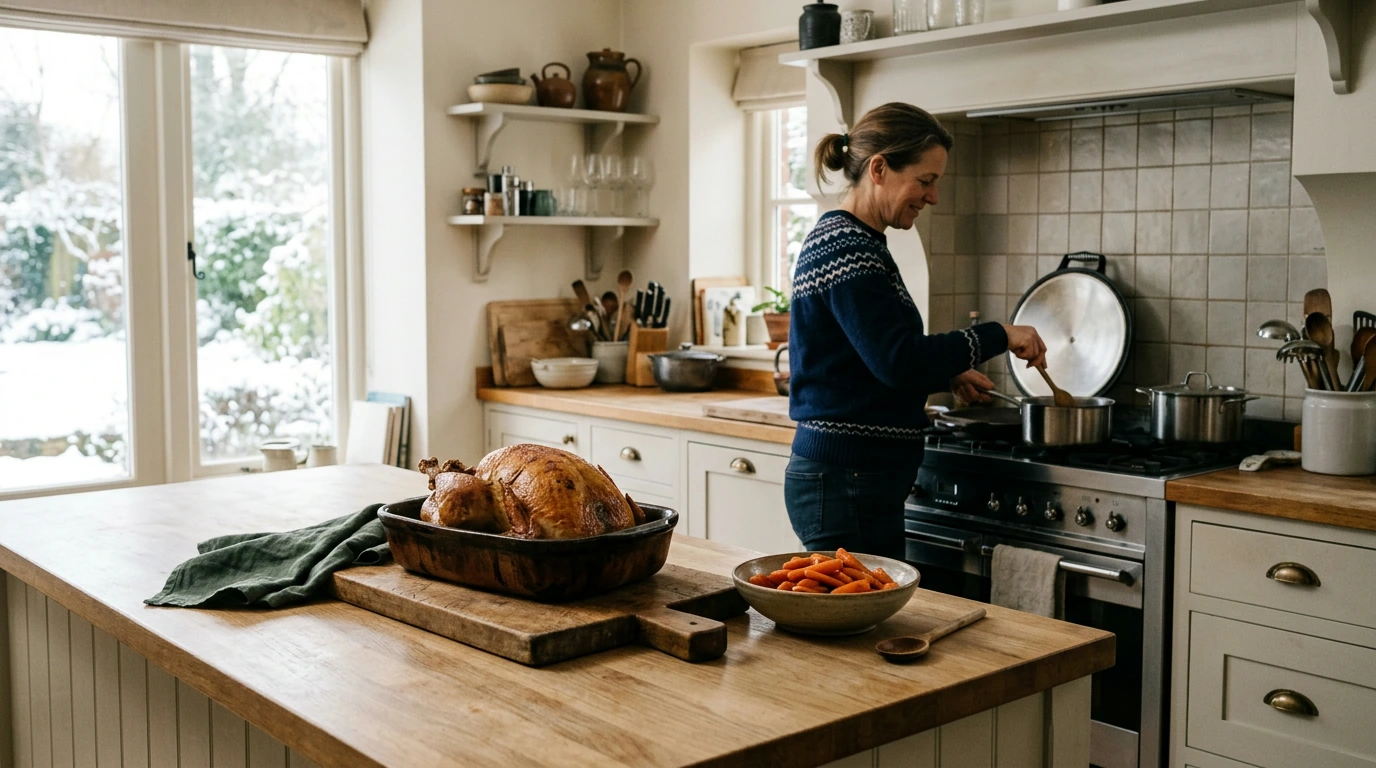
A manageable menu might include roast turkey, a make-ahead potato casserole, green beans, and a pie baked the day before. For a vegetarian centerpiece, consider stuffed squash or a savory lentil loaf.
Ask guests about dietary needs and allergies in advance. Keep ingredients and utensils separate when needed, and choose alternatives that fit your available equipment and time.
Check the product’s listed specifications when evaluating choose dishes that fit your day.
Decide whether the challenge suits you
Our Time the Holiday Cooking Day Challenge is an option if you want to explore a cooking-day challenge as part of your holiday planning. Start with your own menu and serving time, then adjust your plan to suit your recipes and kitchen.
You can share tasks with guests: one person might handle drinks while another helps finish the table.
Check the product’s listed specifications when evaluating decide whether the challenge suits you.
Finish with a safe, simple reset
Before serving, use a food thermometer and follow the USDA safe minimum internal temperature chart for each food. Required temperatures and resting times vary, so check the guidance for what you’re preparing.
After the meal, divide leftovers into shallow containers and refrigerate them promptly. Label containers with the contents and date to make the next few meals easier to plan. The USDA leftovers guidance covers safe storage and reheating.
For an optional cleanup companion, our Smart Home Reset eBook offers a way to approach the post-meal reset. Start with food storage and the dishes you need most, then leave less urgent tidying for later.
Before choosing, compare the product details with your daily routine, available space, care needs, and preferred setup. The strongest option is usually the one that fits the intended use clearly and remains simple to clean, store, and check before repeat use.
It is also worth checking measurements, material notes, included parts, and compatibility details so the item matches the way it will be used after delivery.
FAQ
What are some good holiday cooking ideas?
Try roast turkey or stuffed squash with a make-ahead potato casserole, green beans, and a pie prepared the day before. Ask guests about dietary needs so you can offer suitable alternatives.
What are the typical cooking timings for Christmas dinner?
Timing depends on your menu, recipes, appliances, and the size of the main dish. Work backward from serving time, allow for resting and delays, and check safe internal temperatures with a food thermometer.
What is a traditional holiday food?
Roast turkey, stuffing, and festive desserts are traditional holiday foods for many families. Traditions vary widely by family and culture.
See if Time the Holiday Cooking Day Challenge fits your setup













Leave a comment