


Sibling Rivalry Made Manageable: A Practical Family Guide
25% off on product page · save $1.66
Sibling Rivalry Made Manageable: A Practical Family Guide
Why Siblings Clash
Siblings share space, belongings, routines, and your attention. When any of those feel limited, competition can surface. A new baby, a schedule change, or a stressful transition may also leave children looking for reassurance in ways that frustrate one another.
Different temperaments and developmental stages matter, too. One child may want quiet while another wants company. A younger child may grab a toy before they have the language or patience to ask for a turn.
Occasional disagreements are a normal part of family life, but normal does not mean you have to accept hurtful behavior. You can acknowledge frustration while setting a firm limit on hitting, threats, or unkind words. For more background, see HealthyChildren.org’s sibling rivalry guidance.
Check the product’s listed specifications when evaluating why siblings clash.
Featured in this guide
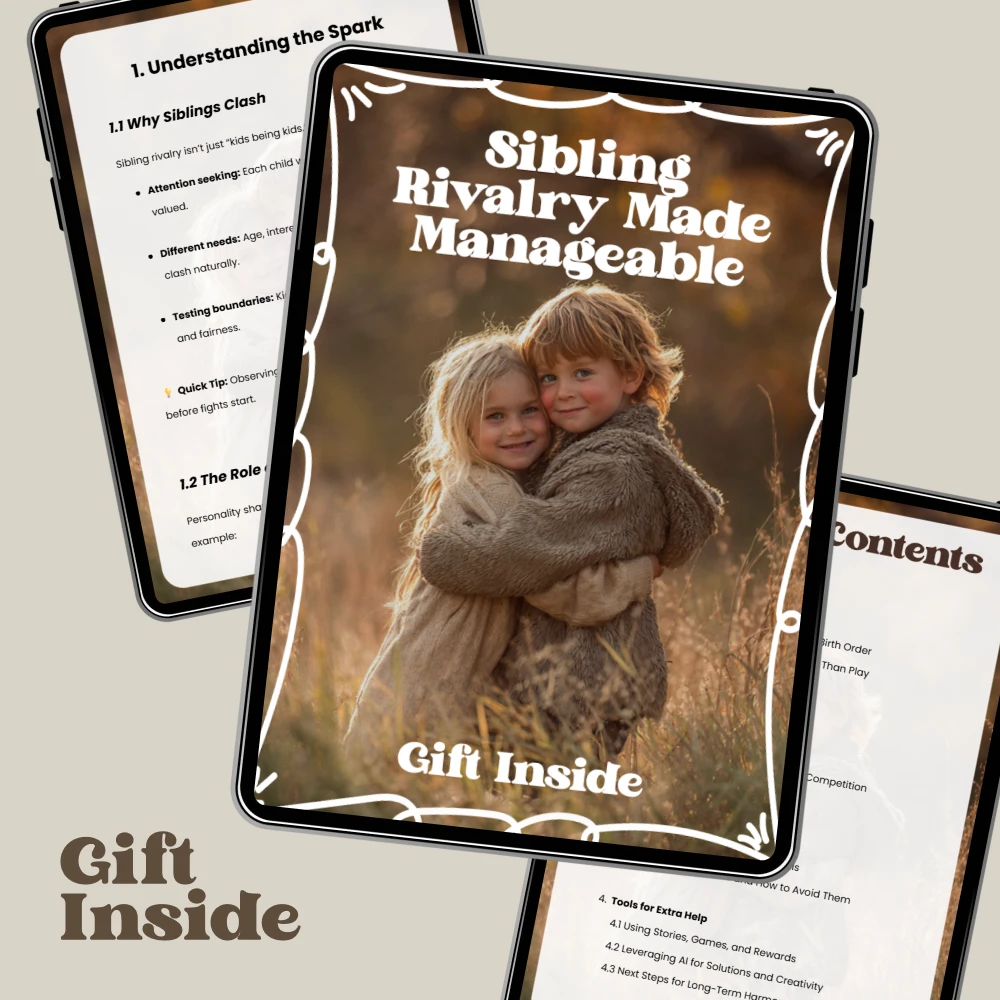
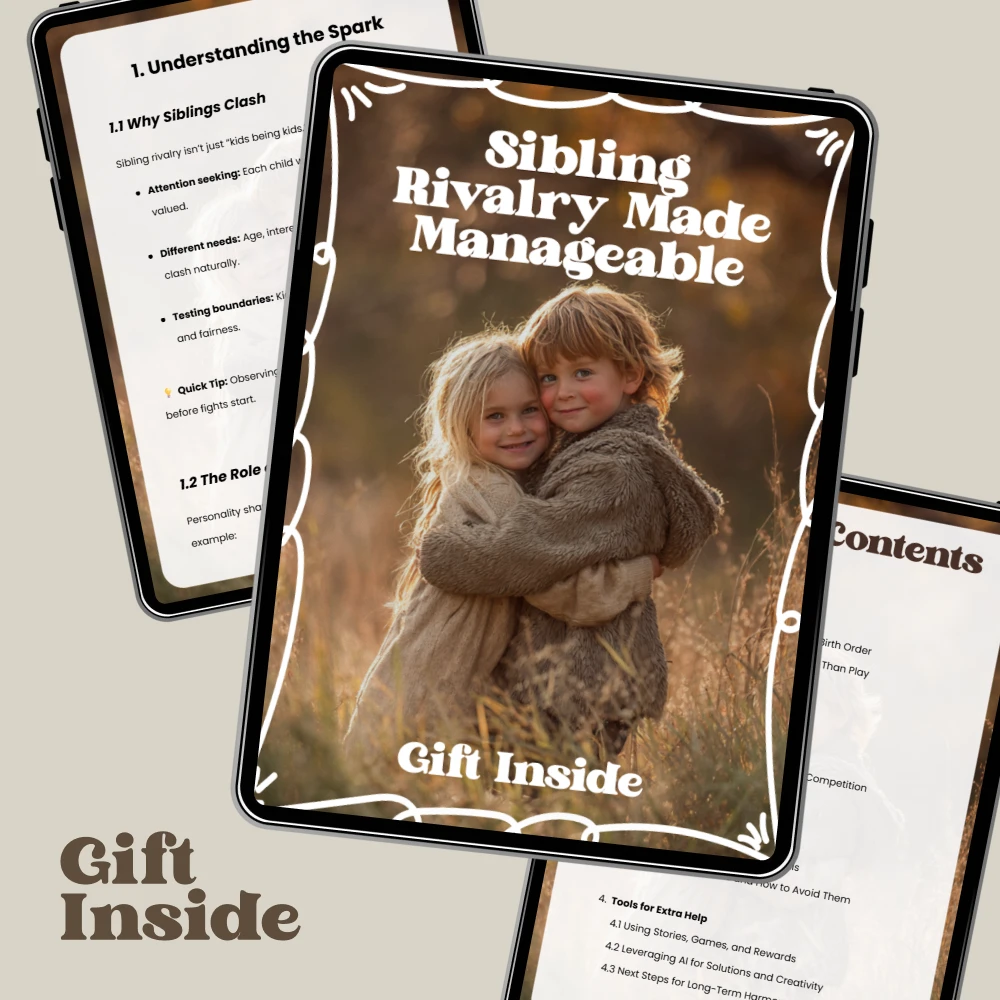
Sibling Rivalry Made Manageable – Practical Family Guide with Proven Sibling Rivalry Management Tips for Peaceful Homes
Turn flashpoints into practice
If anyone is getting hurt or the conflict is escalating, separate the children and check that everyone is safe. Address any injury before discussing what happened.
Once they are calm enough to talk, listen briefly to each child. Name the problem without assigning a fixed role: “You both want the truck.” Then help them take turns or find another activity while they wait. Younger children may need more guidance; older children can suggest solutions themselves.
Choose a response for the situation
- A shared toy: Set a short turn for each child, or put the toy away until everyone is ready to try again.
- Competition for your attention: Acknowledge both children and arrange some individual time with each.
- A physical argument: Separate the children, check for injuries, and address any injury before talking through the conflict.
These are starting points. Adjust them to your children’s ages and needs.
Build habits between arguments
Simple routines can make shared family life feel more predictable. Try a regular order for choosing a game and short rules such as “Hands stay to yourself” and “Ask before borrowing.”
Make time for individual connection, even if it is only a few minutes of reading or talking. Notice specific cooperation, too: “You gave your sister time to finish her turn.”
If aggression is frequent, serious, or feels unsafe, seek support from your pediatrician or a qualified mental health professional.
Check the product’s listed specifications when evaluating build habits between arguments.
A Practical Guide for Your Family
Our Sibling Rivalry Made Manageable family guide focuses on sibling rivalry management and practical steps toward a more peaceful home.
Choose one manageable response to practice consistently. You might start by separating children when play becomes physical, or by helping them take turns with one frequently disputed toy. Adjust your approach to their ages and needs, and revisit it when circumstances change.
If you are also navigating family schedules on your own, our One Driver, Many Kids eBook is another resource for single-driver family life. Consider which challenge needs your attention first: sibling conflict or the logistics of managing everyone’s activities.
Check the product’s listed specifications when evaluating a practical guide for your family.
Before choosing, compare the product details with your daily routine, available space, care needs, and preferred setup. The strongest option is usually the one that fits the intended use clearly and remains simple to clean, store, and check before repeat use.
It is also worth checking measurements, material notes, included parts, and compatibility details so the item matches the way it will be used after delivery.
Before choosing, compare the product details with your daily routine, available space, care needs, and preferred setup. The strongest option is usually the one that fits the intended use clearly and remains simple to clean, store, and check before repeat use.
FAQ
At what age does sibling rivalry start?
There is no single starting age. Rivalry can begin when a young child adjusts to a new sibling and may change as children grow.
Can you give me an example of sibling rivalry?
Two siblings arguing over a shared toy is one example. You can calmly help them take turns and practice asking for what they want.
What does God say about sibling rivalry?
The Bible includes stories of sibling conflict, such as Cain and Abel, and encourages people to treat one another with love and kindness. Families may interpret and apply these teachings in different ways.
See if Sibling Rivalry Made Manageable – Practical Family Guide with Proven Sibling Rivalry Management Tips for Peaceful Homes fits your setup













Leave a comment